
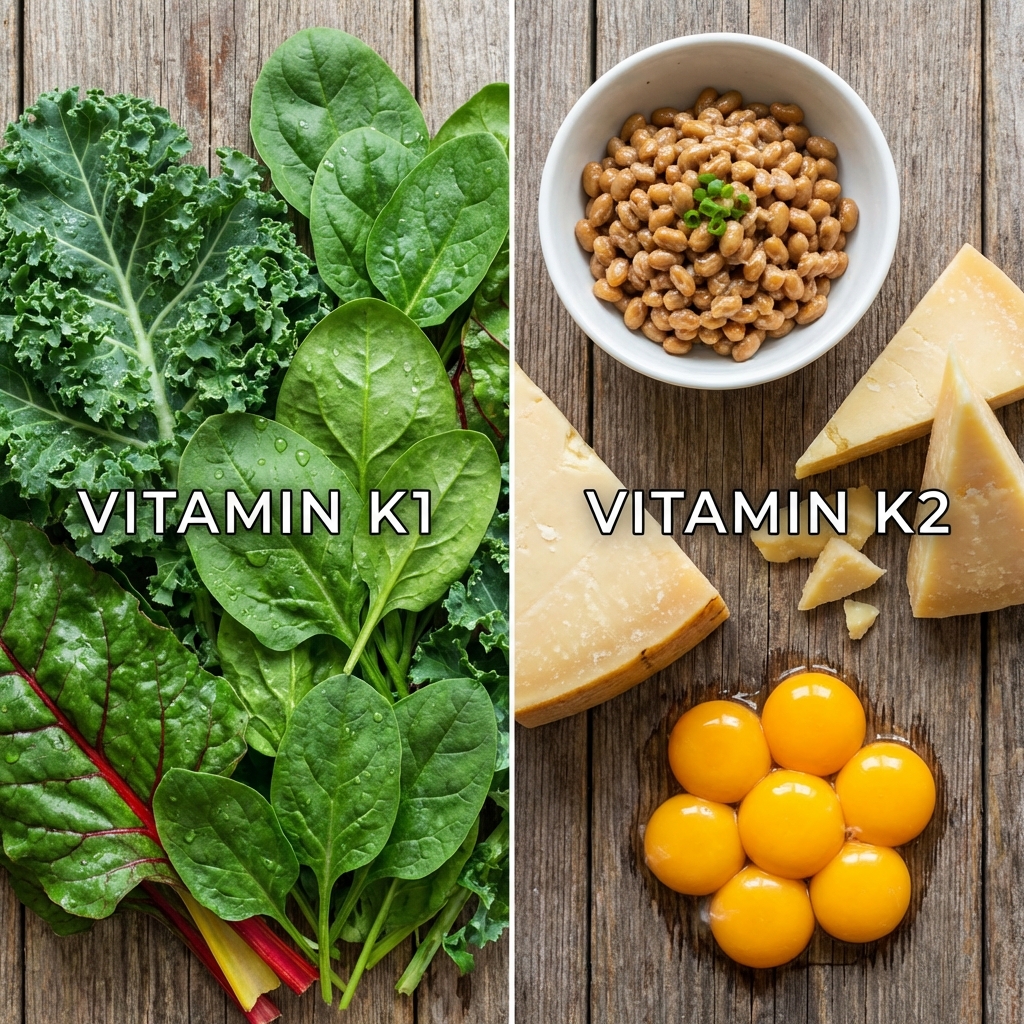
You've heard of Vitamin C for immunity and Vitamin D for bones, but Vitamin K often flies under the radar. To complicate matters, it's not just one vitamin—it's a family. The two main stars, Vitamin K1 (Phylloquinone) and Vitamin K2 (Menaquinone), have distinct roles and come from vastly different food sources. Understanding the difference is key to long-term health.
The Difference: Clotting vs. Calcium Control
While both forms are technically "Vitamin K," they behave differently in the body:
- Vitamin K1 is primarily responsible for blood clotting. It heads straight to the liver to help produce the proteins that stop you from bleeding out when you get a cut.
- Vitamin K2 is the traffic cop for calcium. It activates proteins that guide calcium into your bones and teeth and out of your arteries and soft tissues. This makes it vital for heart and bone health.
Food Sources: Identifying K1 and K2
Knowing where to find these nutrients is essential, especially for vegetarians and vegans.
| Nutrient | Primary Sources | Best Vegan/Vegetarian Options |
|---|---|---|
| Vitamin K1 | Green leafy vegetables, plant oils | Kale, Spinach, Broccoli, Brussels Sprouts |
| Vitamin K2 | Fermented foods, animal products | Natto (fermented soy), Sauerkraut, Hard Cheeses (Gouda, Brie), Egg Yolks |
Focus on Vitamin K2 for Vegans
K1 is easy to get from a salad, but K2 is trickier for plant-based eaters. The absolute superstar source is Natto, a Japanese fermented soybean dish. If the strong taste of natto isn't for you, fermented vegetables like sauerkraut and kimchi contain small amounts, but supplementation might be worth considering.
Absorption Tips
Vitamin K is fat-soluble. This means eating a bowl of plain spinach might not give you the full benefit. Always pair these foods with a healthy fat—like adding olive oil to your salad or eating avocado with your greens—to maximize absorption.
Web Resources
Want to dive deeper into the science? Check out these resources:
Conclusion
Balancing K1 and K2 ensures your blood clots properly and your calcium goes where it belongs. By diversifying your diet to include leafy greens and fermented foods, you build a foundation for strong bones and a healthy heart.
Track your nutrient intake with FoodTrackr to see if you're hitting your daily targets for these essential vitamins.