
You're sleeping eight hours a night, drinking plenty of water, and watching your macros—yet you still feel sluggish by 2 PM. What's going on? Before you reach for another cup of coffee, it's time to talk about iron.
The Oxygen Transporter: Why Iron Matters
Iron is the silent engine of your body. Its primary job is to form hemoglobin, the protein in red blood cells that carries oxygen from your lungs to every tissue, muscle, and organ. Without enough iron, your body simply can't generate enough healthy oxygen-carrying cells.
This is why the hallmark symptom of an iron deficiency—known as iron-deficiency anemia—is profound fatigue. But iron does more than just transport oxygen. It's also crucial for neurological development, hormone synthesis, and keeping your immune system robust.
Heme vs. Non-Heme: Not All Iron Is Created Equal
When checking your iron intake, it's essential to understand that iron from your diet comes in two distinct forms, and they behave differently in your body:
- Heme Iron: Found exclusively in animal products (meat, poultry, and seafood). The body absorbs heme iron very efficiently, usually between 15% to 35%.
- Non-Heme Iron: Found in plant-based foods (beans, lentils, spinach, nuts) as well as fortified foods. While abundant, non-heme iron is less bioavailable, meaning your body only absorbs about 2% to 20% of it.
Top Food Sources
| Source Type | Best Foods |
|---|---|
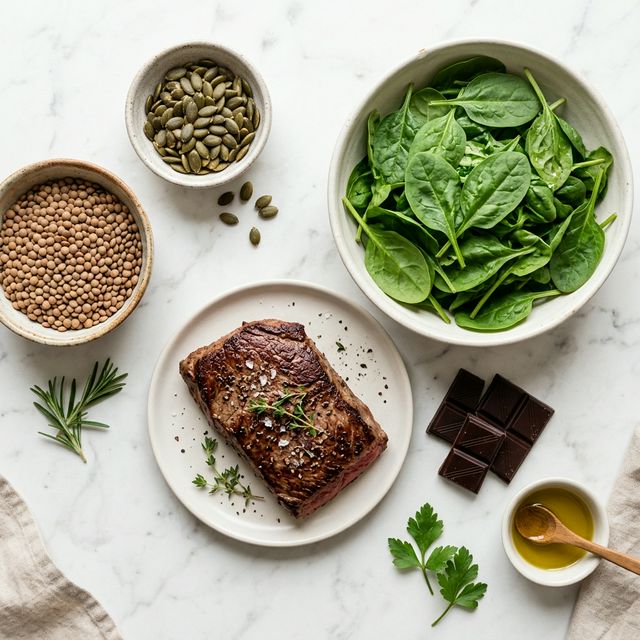
| Heme (Animal-based) | Beef, chicken liver, oysters, mussels, tuna, turkey. |
| Non-Heme (Plant-based) | Lentils, spinach, pumpkin seeds, tofu, fortified cereals, dark chocolate. |
The Secret to Maximizing Iron Absorption
If you follow a vegetarian or vegan diet—or simply prefer plant-based proteins—you don't necessarily need to start eating steak to keep your iron levels healthy. You just need to eat smarter.
Vitamin C is your best friend here. Pairing a non-heme iron source with a Vitamin C-rich food can significantly boost your body's ability to absorb the mineral.
- Try this: Add a squeeze of lemon juice or sliced bell peppers to your spinach salad.
- Try this: Eat a handful of strawberries after a bowl of fortified oatmeal.
Conversely, avoid drinking coffee or strong tea immediately after an iron-rich meal, as tannins can inhibit absorption. Calcium can also block iron uptake, so separate your iron supplements from dairy consumption if possible.
Web Resources
Curious to learn more about how much iron you need at your specific life stage? Check out these references:
Conclusion
Iron is foundational to your daily energy, brain function, and overall vitality. Ensuring you have enough of the right kind—and maximizing its absorption with strategic food pairings—can make the difference between dragging through your day and thriving.
Keep an eye on your micronutrients using FoodTrackr to make sure your iron intake hits the mark, especially if you rely on plant-based sources.