

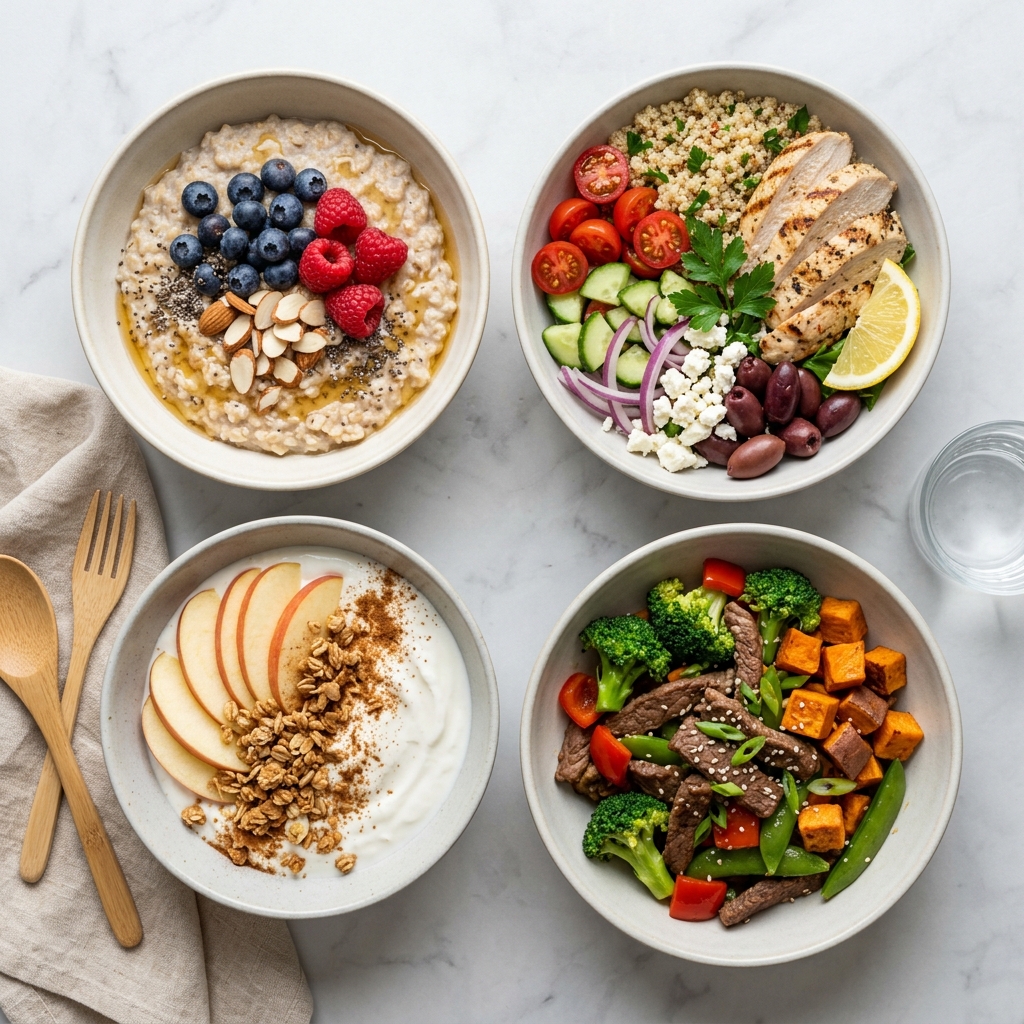
"What should I eat?" is one of the most common questions people ask when trying to improve their health. The answer isn't about extreme restriction or eating boring, tasteless meals. Instead, it's about balance, nutrient density, and finding a sustainable way to fuel your body.
A truly balanced diet provides a healthy mix of carbohydrates, proteins, and fats, along with essential vitamins and minerals. Today, we’re sharing a complete, practical 2,000-calorie sample day that includes wholesome ingredients, healthy fats, and a moderate amount of high-quality meat. This meal plan is designed to keep your energy stable, support muscle maintenance, and leave you feeling fully satisfied.
The Sample Day: Meal by Meal
1. Breakfast: Berry Oatmeal (410 kcal)
Start your morning with a combination of complex carbohydrates for sustained energy and healthy fats.
- Ingredients: 60g rolled oats, 80g mixed berries (blueberries and raspberries), 10g chia seeds, 10g natural peanut butter, and 250ml unsweetened almond milk.
- How to prepare: Cook the oats in almond milk. Remove from heat, stir in the chia seeds, then top with fresh berries and peanut butter.
- Tip: If you want to increase the protein content of your breakfast, you can easily stir in 30g of your favorite whey or plant-based protein powder at the end (adds about 120 kcal and 24g of protein).
2. Lunch: Mediterranean Chicken & Quinoa Bowl (650 kcal)
This lunch is packed with colorful vegetables, lean protein, and healthy fats, keeping you focused and energized throughout the afternoon.
- Ingredients: 150g grilled chicken breast, 150g cooked quinoa, 40g crumbled feta cheese, 150g mixed salad greens (cucumber, cherry tomatoes, and red onion), and 1 tablespoon (10g) of extra virgin olive oil for the dressing.
- How to prepare: Toss the quinoa, fresh salad greens, and feta cheese in a bowl. Drizzle with olive oil and top with warm grilled chicken breast seasoned with herbs.
3. Snack: Greek Yogurt with Almonds & Apple (320 kcal)
A simple mid-afternoon snack that pairs protein with dietary fiber to curb cravings and prevent energy crashes.
- Ingredients: 200g low-fat Greek yogurt (2% fat), 1 medium apple (sliced), and 20g whole almonds.
- How to prepare: Enjoy the Greek yogurt topped with almonds, and eat the apple slices on the side.
4. Dinner: Lean Beef & Sweet Potato Stir-Fry (610 kcal)
End your day with a comforting, nutrient-dense stir-fry that combines lean red meat, fiber-rich sweet potatoes, and plenty of greens.
- Ingredients: 150g lean beef steak (sirloin or strip loin, sliced), 200g roasted sweet potato cubes, 200g mixed stir-fry vegetables (broccoli florets, bell peppers, and zucchini), 10g olive oil for cooking, and a splash of low-sodium soy sauce with garlic and ginger.
- How to prepare: Heat olive oil in a pan, sear the beef strips, then add the vegetables and stir-fry until tender-crisp. Serve over the roasted sweet potato cubes and drizzle with soy sauce dressing.
Daily Nutritional Breakdown
Here is the complete macronutrient breakdown for this sample day. Tracking these numbers ensures you get enough protein for muscle recovery, carbs for energy, and fats for hormone health.
| Meal | Calories (kcal) | Protein (g) | Carbohydrates (g) | Fat (g) |
|---|---|---|---|---|
| Breakfast: Berry Oatmeal | 410 kcal | 14g | 53g | 14g |
| Lunch: Mediterranean Chicken Bowl | 650 kcal | 57g | 45g | 25g |
| Snack: Greek Yogurt, Almonds & Apple | 320 kcal | 24g | 32g | 14g |
| Dinner: Lean Beef & Sweet Potato Stir-fry | 610 kcal | 36g | 50g | 21g |
| Total Daily Value | 1,990 kcal | 131g | 180g | 74g |
Key Takeaways for Balanced Nutrition
Why does this day work so well?
- High Protein Intake: With 131g of protein, this plan supports lean muscle tissue, boosts metabolic rate, and keeps you feeling full.
- Complex Carbs: Oats, quinoa, and sweet potatoes release energy slowly, preventing rapid blood sugar spikes and crashes.
- Heart-Healthy Fats: Olive oil, almonds, and peanut butter provide essential monounsaturated and polyunsaturated fats necessary for nutrient absorption and hormone production.
Web Resources
To learn more about structuring your daily nutrition according to science-backed guidelines, explore these resources:
Conclusion
Eating healthy doesn't have to be complicated. By focusing on whole, nutrient-dense ingredients and dividing your daily intake into structured, balanced meals, you can fuel your body effectively without feeling deprived.
Ready to start tracking your own daily calories and macros? Use FoodTrackr to log your meals, scan barcodes, and stay on top of your personalized health and fitness goals.