

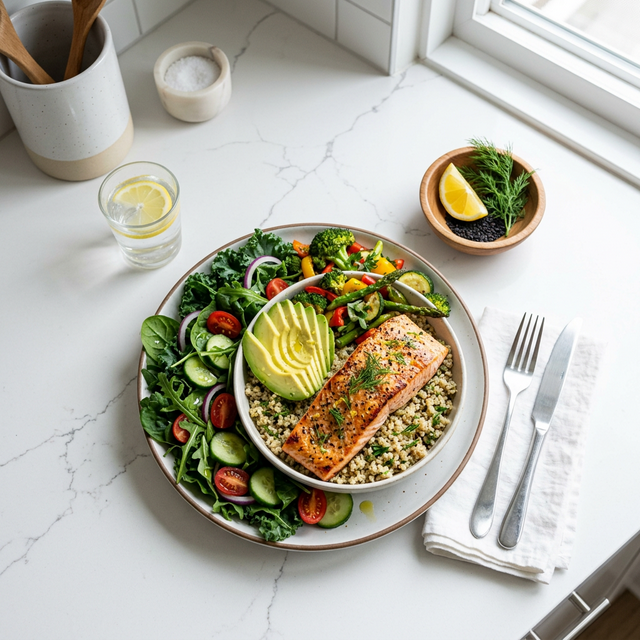
When it comes to weight loss, the internet is full of complex rules and restrictive diets. But science shows that sustainable weight loss comes down to a few fundamental habits focusing on what you eat, not just what you restrict. Here are the 5 best food-focused tips to help you reach your goals without feeling hungry all the time.
1. Prioritize Nutrient-Dense Foods (Volume Eating)
One of the easiest ways to reduce your calorie intake while staying full is to focus on nutrient-dense, low-energy-dense foods. This concept, often called volume eating, involves choosing foods that provide a significant amount of weight and volume but very few calories.
- Why it works: Your stomach stretches to signal fullness, which is based on volume, not calories.
- What to eat: Vegetables (like zucchini, cucumbers, dark leafy greens), fresh fruits (like berries and watermelon), and broth-based soups.
2. Increase Your Protein Intake
Protein is arguably the most critical macronutrient for weight loss and a healthy body composition.
- Why it works: A higher protein intake boosts your metabolism slightly, drastically increases satiety (reducing cravings), and helps preserve lean muscle mass while you lose fat.
- What to eat: Lean meats (chicken, turkey), fish (salmon, tuna), eggs, legumes (beans, lentils), tofu, Greek yogurt, and cottage cheese. Aim to include a good source of protein in every meal.
3. Choose Whole Grains Over Refined Carbs
Carbohydrates aren't the enemy, but the type of carbs you choose matters significantly. Refined carbohydrates (like white bread and pastries) cause rapid spikes and crashes in blood sugar, leaving you hungry shortly after eating.
- Why it works: Whole grains are rich in fiber, which slows down digestion, keeps your blood sugar stable, and helps you feel fuller for much longer.
- What to eat: Oats, quinoa, brown rice, whole-wheat bread, and barley.
4. Incorporate Healthy Fats Mindfully
While fats are higher in calories than proteins and carbs (9 calories per gram vs. 4), they are essential for health and keeping you satisfied. Completely avoiding fat can leave your meals feeling bland and leave you feeling deprived.
- Why it works: Healthy fats take longer to digest, providing sustained energy, and are crucial for the absorption of fat-soluble vitamins (A, D, E, and K).
- What to eat: Avocados, nuts (almonds, walnuts), seeds (chia, flax), and olive oil. Just remember to be mindful of portion sizes.
5. Reduce Ultra-Processed Foods
Perhaps the most impactful single change you can make is to drastically limit ultra-processed foods.
- Why it works: Foods high in added sugars, unhealthy fats, and sodium are often "hyper-palatable"—meaning they are engineered to make you want to keep eating them, easily bypassing your natural fullness cues.
- What to do: Base 80-90% of your diet on whole, single-ingredient foods. When you want a treat, portion it out rather than eating straight from the bag.
Web Resources
Want to dive deeper into the science of healthy weight loss? Check out these resources:
Conclusion
Sustainable weight loss isn't about starving yourself; it's about making smarter choices with the foods you eat. By focusing on protein, fiber, and nutrient density, you can create a calorie deficit naturally while still enjoying your meals.
Use FoodTrackr to log your meals and monitor your protein and fiber intake, ensuring you're hitting your targets for healthy, sustainable weight loss.